What is albuminomics?
Albuminomics is the systematic study of the modified forms of human serum albumin (HSA) — its proteoforms — and their use as biomarkers. A single albumin molecule can carry dozens of post-translational modifications (PTMs): oxidation, glycation, cysteinylation, and truncation, in many combinations. The population of these proteoforms circulating in blood is the albuminome, and its composition changes measurably with disease.
The term is modelled on “genomics” and “proteomics,” but narrowed to one exceptionally informative molecule.
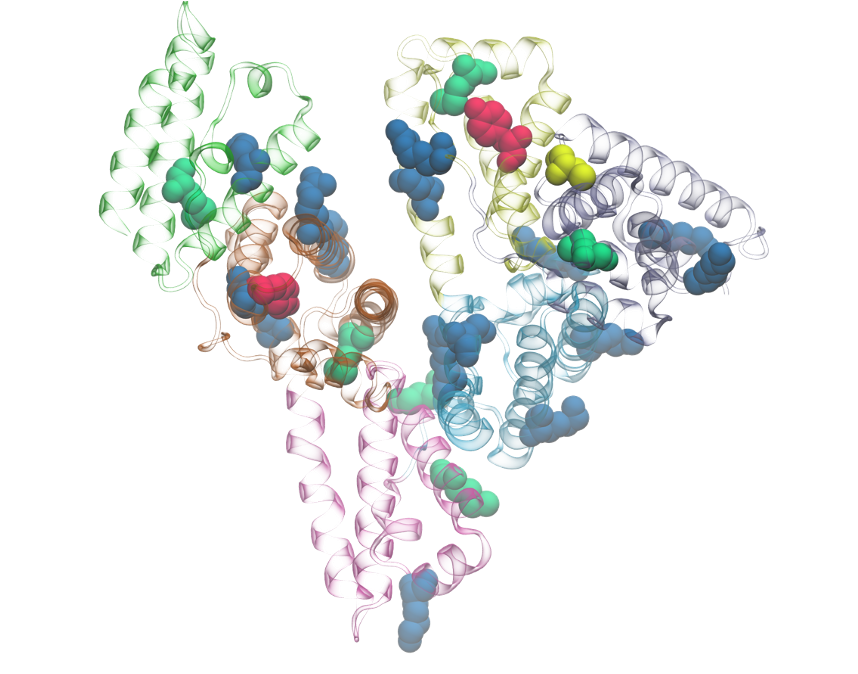
Why albumin, specifically
Human serum albumin is uniquely suited to be a molecular recorder:
- Liver-exclusive synthesis — quantitative and qualitative changes in albumin directly reflect hepatocellular function.
- Long half-life (~20 days) — modifications accumulate, integrating weeks of metabolic and oxidative stress rather than a single moment.
- High abundance (~35–50 g/L) — easily measured from a single blood draw.
- A reactive chemistry — the free thiol at Cys34 is the most reactive in plasma, and multiple lysines are glycation targets, so albumin faithfully registers redox and glycaemic state.
The two ways to read it
Albuminomics reads albumin from two complementary angles:
- Structural — directly identifying and quantifying the proteoforms by top-down mass spectrometry. This yields the isoform fingerprint used for disease staging.
- Functional — measuring what the modifications do to albumin’s binding capacity. This is the Serum Enhanced Binding (SEB) test: when PTMs disrupt a binding site, ligands stay unbound, and the free fraction rises.
Quantity and quality together give effective albumin — the fraction of total albumin that is still structurally and functionally intact (see effective albumin).
What it is used for
- Non-invasive liver disease staging — the isoform profile stages fibrosis across its full spectrum and outperforms FIB-4 (ALBOM study, Sci Rep 2026).
- Early detection of liver injury — functional changes appear before enzyme leak (SEB test).
- Etiology of injury — different insults (alcohol vs metabolic) leave different modification signatures (under validation).
- Beyond the liver — the same principles extend to glycated haemoglobin (HbA1c) and other circulating proteoforms.
Frequently asked questions
Is albuminomics the same as proteomics? No. Proteomics surveys thousands of proteins; albuminomics focuses on the complete proteoform landscape of one protein, which allows far deeper, quantitative characterisation.
Why not just measure total albumin concentration? Concentration is not function. A patient with a normal albumin level can carry albumin that is heavily modified and no longer binds — invisible to a standard assay but detectable by albuminomics.
What technique is required? Top-down LC-HR-MS for the structural profile; ICP-MS for the functional SEB test. Both run from a single blood draw.
See also
History of the inventions · Human serum albumin · HSA isoform biomarker · SEB test · Glossary